There is a particular kind of exhaustion that comes with being a woman in South Africa. It is the exhaustion of constantly being aware of your surroundings, constantly calculating risk and constantly wondering whether something as ordinary as walking, driving, exercising or going home could put you in danger. Being a woman in South Africa sometimes feels like an extreme sport, except we never volunteered to participate.
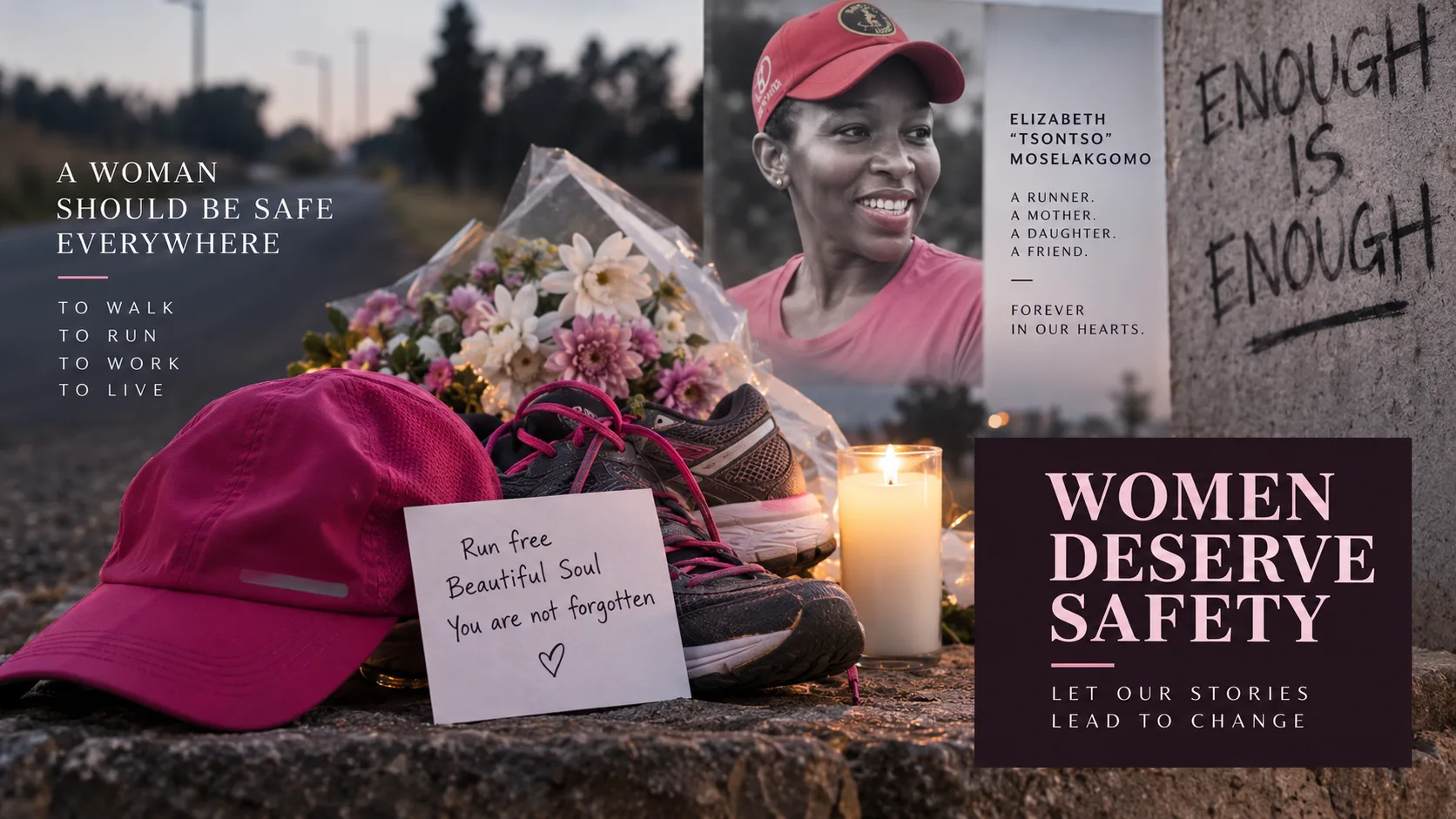
The recent deaths of women being investigated in Ekurhuleni have brought that reality painfully close again. Among the women was 38-year-old Elizabeth “Tsontso” Moselakgomo, who disappeared after going out for a run in Kempton Park in September 2026. Her body was later found. Police are investigating whether there are connections between some of the deaths, particularly because of similarities observed in some of the cases. However, authorities have been clear that, at this stage, they have not confirmed that a serial killer is responsible.
That distinction matters. At a time when fear is spreading quickly on social media, we have a responsibility not to turn speculation into fact. Claims that a so-called “Kempton Park serial killer” has moved elsewhere have also circulated online without police confirmation. The truth is frightening enough without adding rumours to it. Women have died, families are grieving and investigators are trying to establish exactly what happened and whether any of these cases are connected.
What I cannot stop thinking about is how ordinary Elizabeth’s day must have started. She went for a run. That is all. She was not doing something reckless or extraordinary. She put on sports clothes and went outside to exercise, something thousands of people do every day. Yet she did not return home.
It is heartbreaking because women understand how quickly an ordinary moment can become something frightening. We know what it is like to walk towards our cars with our keys already in our hands. We know what it is like to look behind us when footsteps seem to have been following us for too long. We know what it is like to send someone our live location before getting into a car, or to message our family to say that we have arrived safely. We know the relief contained in the simple words, “I’m home.”
Those words should not carry so much weight.
A woman getting home safely should not feel like an achievement. Going for a morning run should not require a safety strategy. Walking from the taxi rank should not require constantly looking over your shoulder. Leaving work late should not mean wondering whether your clothes, your route, your parking spot or the time of day might somehow put you at greater risk.
Yet this is how many of us have learned to live. We plan around danger. We change routes. We avoid certain streets. We share locations. We call each other while walking. We photograph registration plates. We sit in cars and lock the doors immediately. We tell our daughters to be careful, and then we repeat the same warnings the next day because we know that being careful cannot guarantee their safety.
Perhaps that is one of the cruelest parts of being a woman here. We are constantly taught how not to become victims, while the people who choose violence are the ones who should be changing their behaviour. Women are told not to walk alone, not to run alone, not to travel at night and not to trust strangers. These precautions may sometimes be necessary, particularly when police are investigating an immediate threat, but there is something deeply wrong with a society in which women’s freedom must continuously shrink in the name of keeping them alive.
How much smaller must our lives become before we finally admit that this is not normal?
Women should be able to run. We should be able to walk home. We should be able to take public transport, go to work, meet friends, end relationships and say no without wondering whether any of those decisions could cost us our lives. Safety should not be something a woman earns by making all the “right” choices.
Behind every report of another woman’s body being discovered is also a family whose world has changed forever. There is somebody who made a phone call that was never answered. Somebody who waited for a door to open. Somebody who checked WhatsApp repeatedly. Somebody who probably told themselves that she was simply running late. Then came the terrible moment when waiting turned into searching, and searching turned into grief.
That is what statistics sometimes hide. We hear numbers so often that there is a danger of becoming numb to them. But these women were not numbers. They were daughters, mothers, sisters, friends and colleagues. They had plans for the following week. They had clothes in their cupboards, conversations they had not finished and people who expected to see them again. They had lives that were supposed to continue.
This is why the current investigations should concern all of us without requiring rumours or sensationalism. Police must be allowed to establish the facts, determine whether the cases are connected and hold those responsible accountable. At the same time, we cannot ignore the broader fear that these deaths have reopened for women who already live with the reality of violence.
Tonight, somewhere in South Africa, a woman will send someone her live location before travelling home. Another will pretend to be on the phone because a man is walking behind her. Another will decide not to go for that run because it is getting dark. Another mother will stay awake waiting for her daughter’s message. When it finally arrives and says, “I’m home,” she will feel her body relax.
That should break our hearts.
Because being a woman should not require this much vigilance. Existing should not require a survival strategy. Freedom should not come with a list of precautions, and getting home alive should never feel like beating the odds.
Being a woman in South Africa sometimes feels like an extreme sport. The difference is that extreme sports are something people choose to do. We did not choose this.
We simply want to live ordinary lives. We want to work, walk, run, laugh, love, raise our children, grow older and come home safely at the end of the day.
That should not be considered too much to ask.