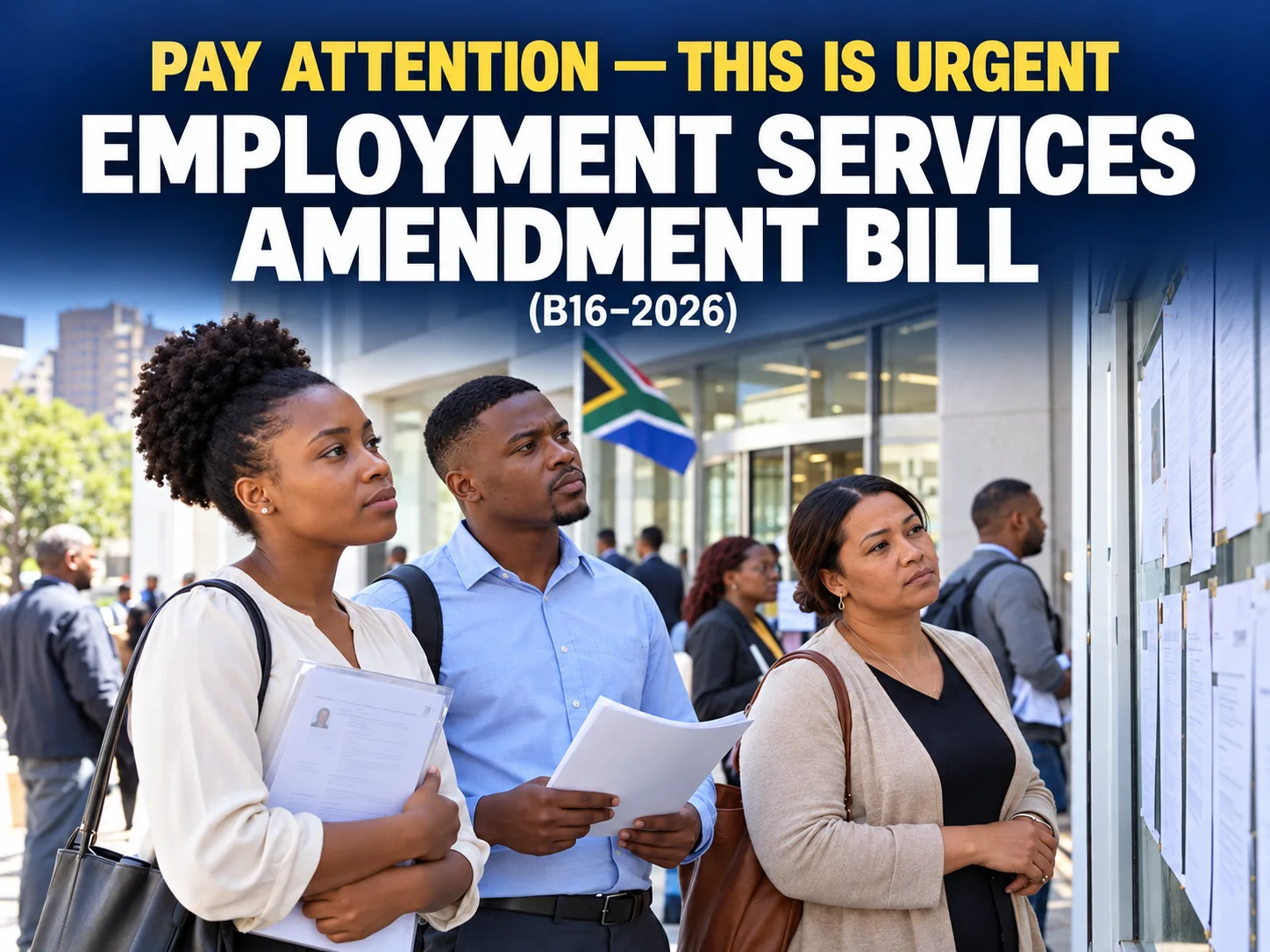
Did you know about the Employment Services Amendment Bill and its proposed changes to the rules governing foreign employment? South African citizens and permanent residents can compete with legally eligible refugees and asylum seekers for the same vacancies. My concern is how the bill would treat that competition in a country where millions desperately need work.
Clause 1(d) proposes excluding refugees and asylum seekers from the definition of “foreign national” for purposes of the Employment Services Act. The bill also proposes allowing limits on the employment of foreign nationals. Read together, these provisions would place refugees and asylum seekers outside the category counted towards those foreign-worker quotas.
That means employment outside the foreign-worker quota would not be reserved exclusively for South African citizens and permanent residents. Refugees and asylum seekers who are legally permitted to work and meet the requirements could also compete for those vacancies. We are not saying government or employers will prioritise them. We are saying they will now compete with us for the same jobs. That distinction is clear.
For example, if a future quota allowed 20% foreign workers, the remaining 80% would not necessarily consist only of citizens and permanent residents. Refugees and asylum seekers could also be employed within that remaining share. The bill sets no percentage; this is an example of how the proposed definition would affect a quota.
The explanatory memorandum makes the intended employment treatment explicit. Paragraph 2.1(g) explains that people applying for, or awarded, refugee status would have the same status regarding employment as citizens and permanent residents within this framework. Lawful competition for vacancies already exists; the proposed amendment would place these categories outside the new foreign-worker restrictions.
What does that protection offer a South African who cannot find work? That is the question government must answer. A person who has spent years applying for jobs needs to understand how this framework improves their chances of earning a living.
Official unemployment stood at 33.6% in the second quarter of 2026. Among economically active young people aged 15–24, it reached 62.8%. These figures represent households without reliable incomes and young people struggling to begin their working lives.
I strongly oppose the proposed exclusion because I believe government must provide stronger protection for citizens’ employment opportunities. South Africans have every right to question a quota system whose remaining employment share would still include competition from legally eligible refugees and asylum seekers. Our concern deserves a direct answer.
Government must explain the practical consequences, publish evidence and account for its choices. Unemployed citizens should not have to struggle through legal definitions to discover that jobs outside a foreign-worker quota are not exclusively reserved for them.
Members of the public can submit written comments to employmentservicesbill@parliament.gov.za, addressed to the Portfolio Committee on Employment and Labour, for the attention of Mr Zolani Sakasa. Parliament’s published deadline is 6 November 2026 at 16:00. Read the provisions, state your concerns and demand clear answers about what this framework will mean for South Africans seeking work.