It has been a long time since we last had a proper chat here.
I have not abandoned writing, and I have definitely not run out of opinions. I have simply been catching up on some real work instead of writing about work, and quite a lot has happened over the past few weeks.
For starters, Lelo Klaas & Associates finally has a live website. I have spent a lot of time working on it, tweaking things, changing things that were perfectly fine five minutes earlier, and doing all the other unnecessary things we do when something belongs to us and we cannot leave it alone.
So please go and have a look. And while we are here, if you need a website, you know where to find me. A basic website starts at around R3,500. There, I have advertised my business. We can continue.
I also upgraded the website for Aquarium & Ponds, one of my clients. If you need an aquarium or pond installation, those are genuinely people I am comfortable recommending. I am not saying that simply because they are my clients. I have known them for a long time, and integrity matters to me when I recommend someone’s business.
Then I moved on to Klaasic Prints, which has probably taken more hours of my life than I care to calculate. That website has also just gone live. There may still be a few teething issues because, as anyone who works with websites knows, a website waits until you announce that it is live before suddenly remembering seventeen things it would like you to fix.
But it is live.
So yes, I have been working. I have been minding my business and getting things done.
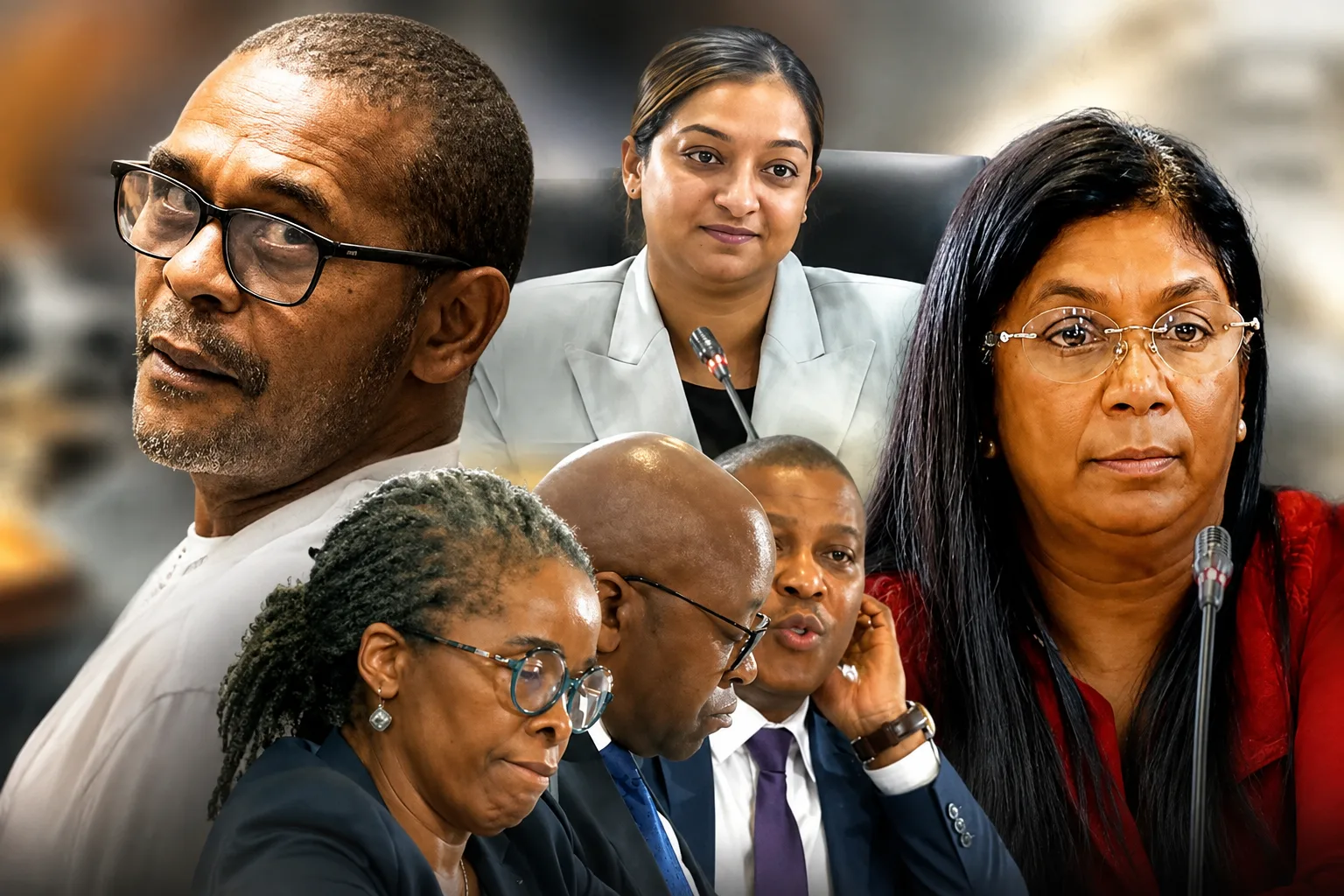
And then Fadiel Adams appeared before the Madlanga Commission.
My goodness.
I had to come back and write.
I Kept Asking Myself One Question
I knew there had been controversy around Fadiel Adams and the complaints that eventually became part of the Crime Intelligence investigation. What I was not prepared for was how much of his testimony would leave me asking:
But did you actually stop and think about any of this?
That may sound harsh, but there were moments during his testimony when I genuinely struggled to understand the reasoning behind some of his decisions.
This is not about saying that every allegation Adams has ever made must therefore be false. That would be intellectually dishonest. A questionable witness can still provide truthful information, just as a credible person can sometimes be wrong.
The allegations before the Madlanga Commission are serious and should be investigated properly.
My concern is something different. It is about how information becomes an allegation, how an allegation becomes a criminal complaint, and how easily people’s lives can become collateral damage when the person driving that process stops questioning the people around him.
“There Are Things I Was Willing to Close My Eyes To”
One of the moments that stayed with me came when Adams was questioned about his dealings with the Investigating Directorate Against Corruption and the things he was prepared to tolerate while trying to get his cases taken seriously.
What struck me about his response was his acknowledgement that there were things he had been willing to “close my eyes to” in pursuit of the result he wanted.
That is a remarkable thing to admit when you are dealing with allegations this serious.
If you believe that you are exposing corruption, you cannot selectively close your eyes to questionable behaviour simply because the people involved appear to be helping you achieve your objective.
You cannot demand accountability from one group while suspending your own questions about another.
The moment you decide that the destination matters more than how you get there, you make yourself vulnerable to manipulation. Someone only needs to convince you that they are helping you fight the people you already distrust, and suddenly things that should have raised alarm bells become things you are prepared to overlook.
That is dangerous.
These Were Not Small Consequences
This is also why I struggle with reducing everything that happened to gossip, personalities and political drama.
These were not harmless conversations.
Cases were opened. People were accused. Investigations followed. Careers, reputations and families became part of something much bigger.
When you make serious allegations about somebody, the consequences do not wait for the final judgment before they arrive.
A person’s name can become associated with corruption before a court has established anything. Their career can be interrupted. Their family can be dragged into public scrutiny. Search their name online years later and the allegation may still be sitting there even if the case eventually goes nowhere.
That is why I cannot simply shrug at the idea of someone being prepared to overlook certain things because they believed they were pursuing a greater objective.
When your actions can complicate other people’s lives, you have a responsibility to think carefully.
You have to ask questions. You have to verify information. You have to question the motives of the people feeding you that information.
Most importantly, you have to allow for the possibility that the people telling you exactly what you want to hear may have their own reasons for telling you those things.
Information Is Not Automatically Evidence
This was probably my biggest frustration while listening to Adams.
There seemed, at times, to be a very thin line between what somebody had told him and what he had accepted as true.
Those are not the same thing.
Somebody telling you that a person is corrupt is information. Somebody telling you that a police officer is involved in criminal activity is an allegation. Somebody telling you that certain people are working together is a claim.
None of those things automatically becomes fact simply because the source sounds convincing.
That is why investigations exist.
You verify. You corroborate. You look for documents. You compare accounts. You establish timelines. You ask whether the person providing information could benefit from you believing it.
And you keep asking questions even when the answers are inconvenient.
That last part matters because critical thinking is not only about questioning information you dislike. It is also about questioning information you desperately want to be true.
Then There Was General André Lincoln
Another significant part of Adams’s evidence concerned the late Major-General André Lincoln.
Adams maintained that General Lincoln was one of his important sources and that Lincoln had advised him to lay criminal charges against senior Crime Intelligence officials.
General André Lincoln has passed on, may his soul rest in peace.
That immediately makes this a sensitive matter because he is no longer here to explain those conversations himself. He cannot tell the Commission exactly what he said, what he meant, what information he had at the time or whether Adams’s recollection accurately reflects the advice he gave.
That does not automatically make Adams’s version false.
But it certainly means we should be cautious about treating conversations attributed to General Lincoln as established fact when he cannot give us his own account.
What makes the situation even more complicated is that people close to General Lincoln have publicly challenged the way Adams portrayed him.
Longtime friend and family spokesperson Brian Williams disputed the suggestion that Lincoln would have encouraged unlawful conduct and expressed concern about Lincoln’s name being used to strengthen an argument when he is no longer here to respond for himself.
Again, the family’s position does not automatically establish what happened in private conversations between Adams and Lincoln.
But neither does Adams’s version automatically settle the matter.
When the person at the centre of an alleged conversation has passed on, humility about what we can actually establish becomes even more important.
Maybe Adams Believed What He Was Being Told
There is another possibility worth considering, and I think it is more interesting than simply deciding that Adams was deliberately lying about everything.
What if he genuinely believed much of what he was being told?
That possibility actually raises more questions for me.
Because then we have to ask why he believed it, what he did to verify it, how much of it he independently confirmed and whether his existing feelings about the people involved affected how critically he examined the information.
Human beings do this all the time.
Once we have formed an opinion about somebody, information confirming that opinion becomes incredibly easy to believe. We hear something negative about someone we already distrust and think, I knew it.
The information fits, so we stop interrogating it.
That is confirmation bias, and none of us is immune to it.
The danger is considerably greater when the person experiencing it has the ability to open cases, approach powerful institutions and make accusations capable of affecting other people’s lives.
The Commission Must Follow the Evidence
For all my criticism of Adams’s testimony, I do not think the Madlanga Commission should become a referendum on whether people like or dislike Fadiel Adams.
This is much bigger than one witness.
The Commission is dealing with serious allegations involving policing, Crime Intelligence, political interference, corruption and possible criminal networks.
Those allegations deserve proper investigation.
If Adams has evidence, examine it. If another witness contradicts him, examine that evidence too. If Crime Intelligence officials have questions to answer, make them answer. If investigators or other officials behaved improperly, investigate them too.
Follow the evidence wherever it goes.
Nobody should receive special protection because of rank, political affiliation, race or popularity.
At the same time, nobody should be presumed guilty simply because an allegation against them sounds believable.
That is precisely why evidence matters.
What Stayed With Me
After everything I watched, I kept coming back to the idea of being willing to close your eyes to certain things because you are focused on the result.
That worries me far beyond Fadiel Adams.
We all do versions of it.
We excuse questionable behaviour when it comes from people we support. We believe allegations more quickly when they concern people we already dislike. We demand impossible standards of evidence from one side while accepting screenshots, rumours and second-hand conversations from another.
Then we call it truth.
You cannot demand accountability while selectively closing your eyes.
If we genuinely want corruption exposed, then the standard has to remain the same regardless of who is standing in front of us.
Question everyone. Verify everything. Follow the evidence.
And when new evidence contradicts something you previously believed, have enough intellectual honesty to reconsider your position.
Changing your mind when the evidence changes is not weakness. It is what thinking is supposed to look like.
The Madlanga Commission still has serious work to do, and I will continue watching.
But after listening to Fadiel Adams, one thing became very clear to me.
Being absolutely convinced that you are right is not the same thing as actually being right.