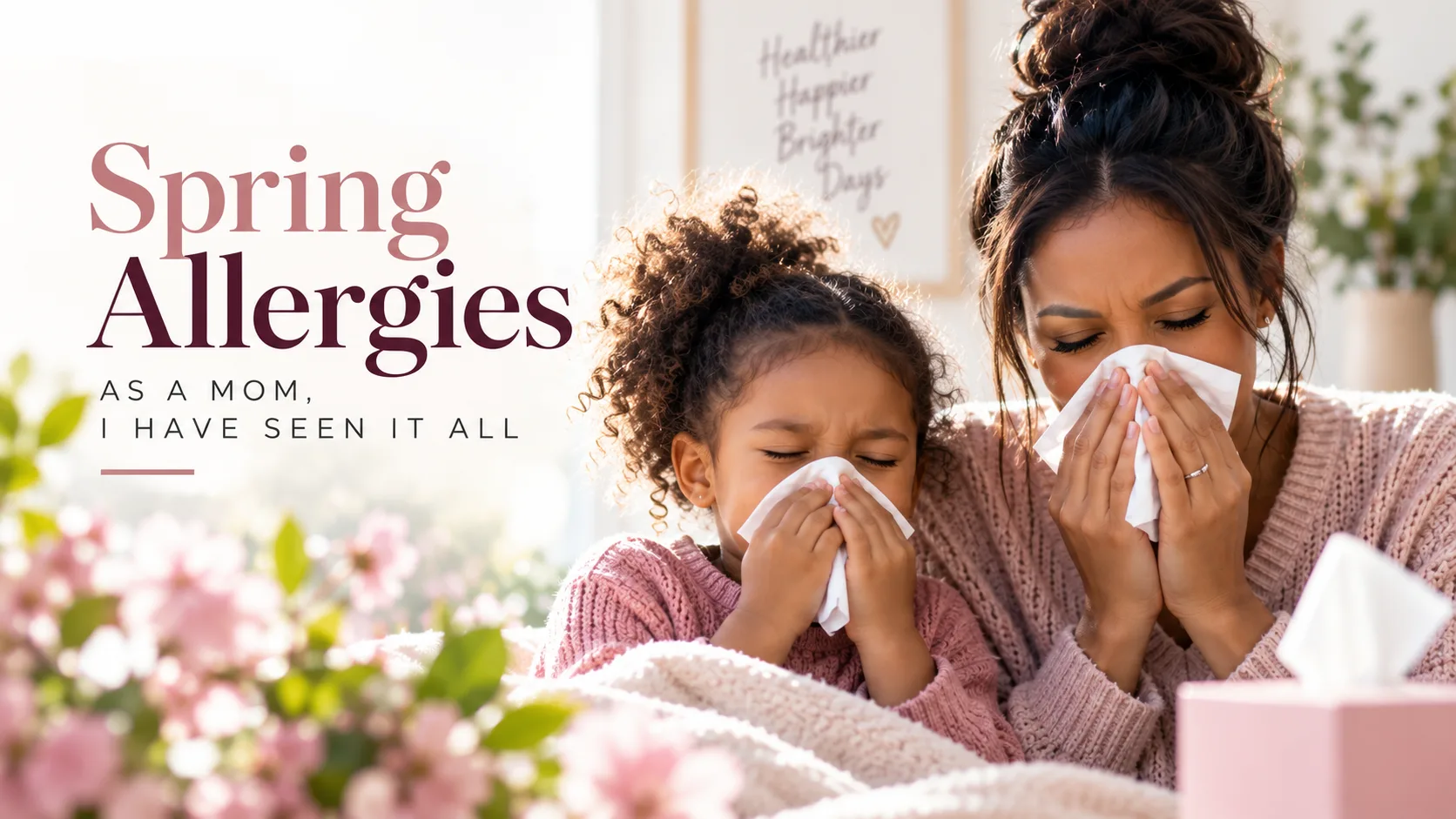
As a mom, I feel like I have seen it all when it comes to spring allergies. Every year, it is something new.
Unfortunately, with hay fever, there always seems to be a new symptom or a different version of the same problem. One year, the eyes seem to suffer the most. The next year, it is an itchy or irritated throat. Then another spring arrives and suddenly congestion is the biggest problem.
In most cases, several symptoms appear at the same time, but there is usually one that is far more intense than the others.
And just when you think you know exactly what to expect from allergy season, spring arrives with a slightly different experience.
What Are the Symptoms of Spring Allergies?
Spring allergies, commonly called hay fever or seasonal allergic rhinitis, happen when the immune system reacts to allergens in the environment. During spring, pollen from trees, grasses and other plants is one of the biggest triggers.
Some of the most common seasonal allergy symptoms include:
- Nasal congestion
- Frequent sneezing
- Itchy eyes, nose or throat
- Runny nose
- Watery or irritated eyes
- Post-nasal drip, where mucus drains down the back of the throat
- Coughing
- Tiredness or fatigue
For children especially, it is not always immediately obvious that allergies are responsible.
A child may simply seem tired. They may start coughing at night, constantly rub their nose or eyes, complain about their throat, or wake up congested. Sometimes it looks so much like the beginning of a cold that you naturally assume they are getting sick.
Why Can Spring Allergies Feel Different Every Year?
This is something I have noticed over the years.
The symptoms may be familiar, but their intensity can change from one allergy season to another. Some years may be dominated by itchy, watery eyes, while another year may bring much worse nasal congestion, sneezing or throat irritation.
The amount and type of pollen in the air can vary depending on weather conditions, rainfall, wind, temperature and the plants releasing pollen at a particular time.
Your exposure can also change. Spending more time outdoors, sleeping with windows open or being outside on particularly high-pollen days may make symptoms more noticeable.
That is why spring allergies do not necessarily feel exactly the same every year.
Can Spring Allergies Actually Make You Feel Sick?
Absolutely, although allergies themselves are not the same thing as having a viral infection such as a cold.
This distinction can be confusing because seasonal allergies can make you feel genuinely unwell.
Constant congestion can affect sleep. Post-nasal drip can irritate the throat and cause coughing. Blocked or irritated nasal passages can leave you uncomfortable throughout the day. Poor sleep combined with your body’s ongoing allergic response can also contribute to fatigue.
So when someone says, “It is only allergies,” the word only can seriously underestimate how miserable allergy season can feel.
You can be congested, exhausted, coughing and generally run-down without actually having a cold.
Allergy or Cold: How Can You Tell the Difference?
This is probably one of the hardest parts for parents.
Sneezing, congestion, coughing and a runny nose can happen with both allergies and respiratory infections. However, itchy or watery eyes and an itchy nose are more characteristic of allergies.
Allergy symptoms may also continue for weeks or return whenever someone is exposed to a particular trigger.
A cold usually develops because of a viral infection and improves as the infection runs its course. Fever, significant body aches or feeling acutely ill are also more suggestive of an infection than straightforward seasonal allergies.
That does not mean every symptom should automatically be blamed on hay fever. If something feels different from the usual allergy pattern, particularly in a child, it is worth paying attention.
How Can You Reduce Spring Allergy Symptoms?
After going through allergy season year after year, prevention becomes just as important as dealing with symptoms once they arrive.
One useful habit is checking pollen levels, particularly if you already know that someone in your household struggles during spring.
When high pollen levels are expected, try to reduce unnecessary exposure. Keep windows and doors closed when pollen levels are particularly high, especially if symptoms are already troublesome.
It may also help to avoid spending long periods outdoors when pollen levels are high. After being outside, changing clothes, washing your face or showering can help remove pollen that has settled on your skin and hair.
Pollen can travel indoors on clothing, shoes and even pets, so keeping the home completely pollen-free is almost impossible. The goal is simply to reduce exposure where reasonably possible.
For people who regularly use allergy medication, a doctor or pharmacist may recommend beginning treatment before symptoms become severe or before the allergy season reaches its peak. The appropriate treatment will depend on the person, their age, symptoms and medical history.
When Should You Speak to a Doctor?
Seasonal allergies are common, but persistent symptoms should not simply be ignored.
Speak to a healthcare professional if symptoms are severe, interfere with sleep, school or normal daily activities, continue despite appropriate treatment, or you are unsure whether allergies are actually responsible.
Breathing difficulties, wheezing or shortness of breath require particular attention, especially for someone who has asthma or another respiratory condition.
Every Spring Seems to Bring Something Different
As a mom, this has probably been my biggest lesson about allergy season: never assume this year’s experience will look exactly like last year’s.
One spring, you are dealing with itchy eyes. The next, everyone seems to be clearing their throat. Then suddenly congestion becomes the main event.
Eventually, you start recognising the pattern.
Spring arrives. The pollen arrives. Then somebody starts sneezing.
And you think, here we go again.
The good thing is that once you understand the symptoms and your family’s usual triggers, you can prepare a little better. You may not be able to completely avoid spring allergies, but recognising them early and reducing exposure can make the season much more manageable.
Disclaimer: This article is for general information only and is not a substitute for medical advice, diagnosis or treatment. If you are concerned about allergy symptoms, particularly severe symptoms or breathing difficulties, consult a qualified healthcare professional.