Itchy, watery eyes can turn a normal day into a miserable one. Whether triggered by pollen, pet dander, dust, or simply dry air, the constant urge to rub your eyes only makes things worse. The right eye drops can provide fast relief—but walk down any pharmacy aisle and the sheer number of options can feel overwhelming.
Here’s a clear breakdown of what works, why it works, and how to choose the best drops for your symptoms.
First, What’s Causing the Problem?
Before grabbing a bottle, it helps to understand the cause. Itchy, watery eyes usually fall into one of three categories:
- Allergic conjunctivitis – Your immune system overreacts to allergens like pollen, mold, or pet hair. This is the most common cause of itchiness.
- Dry eye – Paradoxically, dry eyes can trigger excessive watering as your tear glands try to compensate.
- Irritation – Smoke, wind, screen time, or contact lenses can inflame the surface of the eye.
The best drop depends on which category you’re in.
The Best Eye Drops by Symptom
1. For Allergy-Related Itchiness: Antihistamine Drops
If your eyes itch and water during pollen season or around pets, you likely need an antihistamine or mast-cell stabilizer drop. These target the histamine release that causes itching and redness.
Top options:
- Ketotifen fumarate (e.g., Zaditor, Alaway) – Available over-the-counter in many countries, ketotifen provides relief within minutes and lasts up to 12 hours. It’s widely considered the gold standard for OTC allergy eye drops.
- Olopatadine (e.g., Pataday) – A dual-action antihistamine and mast-cell stabilizer. Stronger than ketotifen for severe allergies; some formulations require a prescription depending on your region.
- Naphazoline + pheniramine (e.g., Opcon-A, Naphcon-A) – Combines an antihistamine with a redness reliever. Good for occasional use, but avoid daily long-term use due to rebound redness risk.
Tip: If you wear contact lenses, remove them before using medicated drops and wait at least 10–15 minutes before reinserting.
2. For Dry, Watery Eyes: Lubricating Drops (Artificial Tears)
When your eyes water because they’re actually dry, artificial tears restore the tear film and reduce reflex tearing. Look for preservative-free options if you need to use them more than four times a day.
Top options:
- Carboxymethylcellulose (CMC) – Found in brands like Refresh and TheraTears. Gentle and effective for mild dryness.
- Sodium hyaluronate (hyaluronic acid) – Found in brands like Hyabak, Hycosan, and some Xailin formulations. Excellent for coating the eye surface and lasting longer between applications.
- Glycerin/propylene glycol blends – Found in Systane and Optive ranges. These create a protective layer that’s especially helpful for evaporative dry eye (common with screen use).
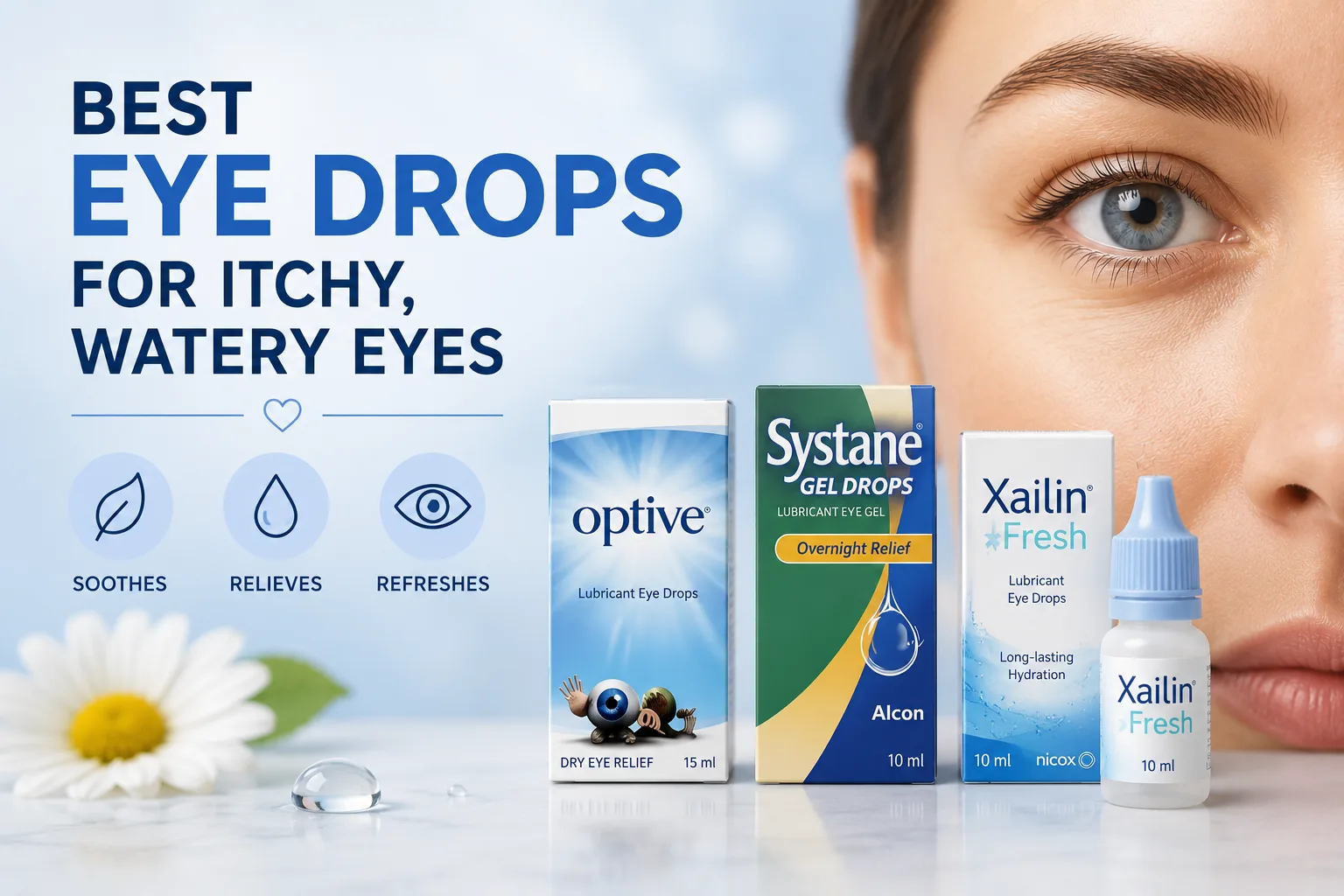
Tip: If the product in the image caught your eye—Optive, Systane, Xailin, and Artelac are all reputable lubricating drop ranges. For itchy, allergy-driven symptoms, pair these with an antihistamine drop or use a lubricating drop that specifically mentions allergy relief.
3. For Redness: Decongestant Drops (Use Sparingly)
Products containing tetrahydrozoline or naphazoline (e.g., Visine, Clear Eyes) shrink blood vessels to reduce redness. They do not treat the underlying cause of itching and can cause rebound redness if used for more than 3–4 days. Use them for cosmetic emergencies only—not as a treatment.
What to Look For on the Label
Table
| Feature | Why It Matters |
|---|---|
| Preservative-free | Essential if using drops more than 4x daily or if you have sensitive eyes. Look for single-use vials. |
| Contact lens safe | Some drops are formulated to be used while lenses are in; others will damage lenses. |
| Dual-action antihistamine | Combines immediate relief with mast-cell stabilization for longer-term protection. |
| Gel or ointment base | Better for nighttime use if you wake with gritty, dry eyes. |
When to Skip the Drops and See a Doctor
Eye drops can’t fix everything. Seek professional care if you experience:
- Severe eye pain or light sensitivity
- Thick yellow/green discharge (possible infection)
- Blurred vision that doesn’t clear with blinking
- Symptoms lasting more than a week despite treatment
- A feeling like something is stuck in your eye
These could indicate an infection, corneal abrasion, or another condition that requires prescription treatment.
Simple Habits That Help
- Don’t rub your eyes – It releases more histamine and worsens inflammation.
- Use cold compresses – A clean, cold washcloth over closed eyes for 5–10 minutes reduces itch and swelling.
- Rinse allergens away – Saline eye washes or preservative-free artificial tears can physically flush pollen from the eye surface.
- Manage your environment – Keep windows closed during high pollen counts, use air purifiers, and wash bedding frequently if dust mites are a trigger.
The Bottom Line
For allergy-driven itchiness, an antihistamine drop like ketotifen or olopatadine is your best first-line defense. For dry, watery eyes, a quality preservative-free artificial tear with hyaluronic acid or CMC will restore comfort. Avoid redness-relief drops for daily use, and don’t hesitate to see an eye care professional if symptoms persist.
The best eye drop is the one that matches your specific cause—and the sooner you identify it, the sooner you can stop rubbing and start seeing clearly again.