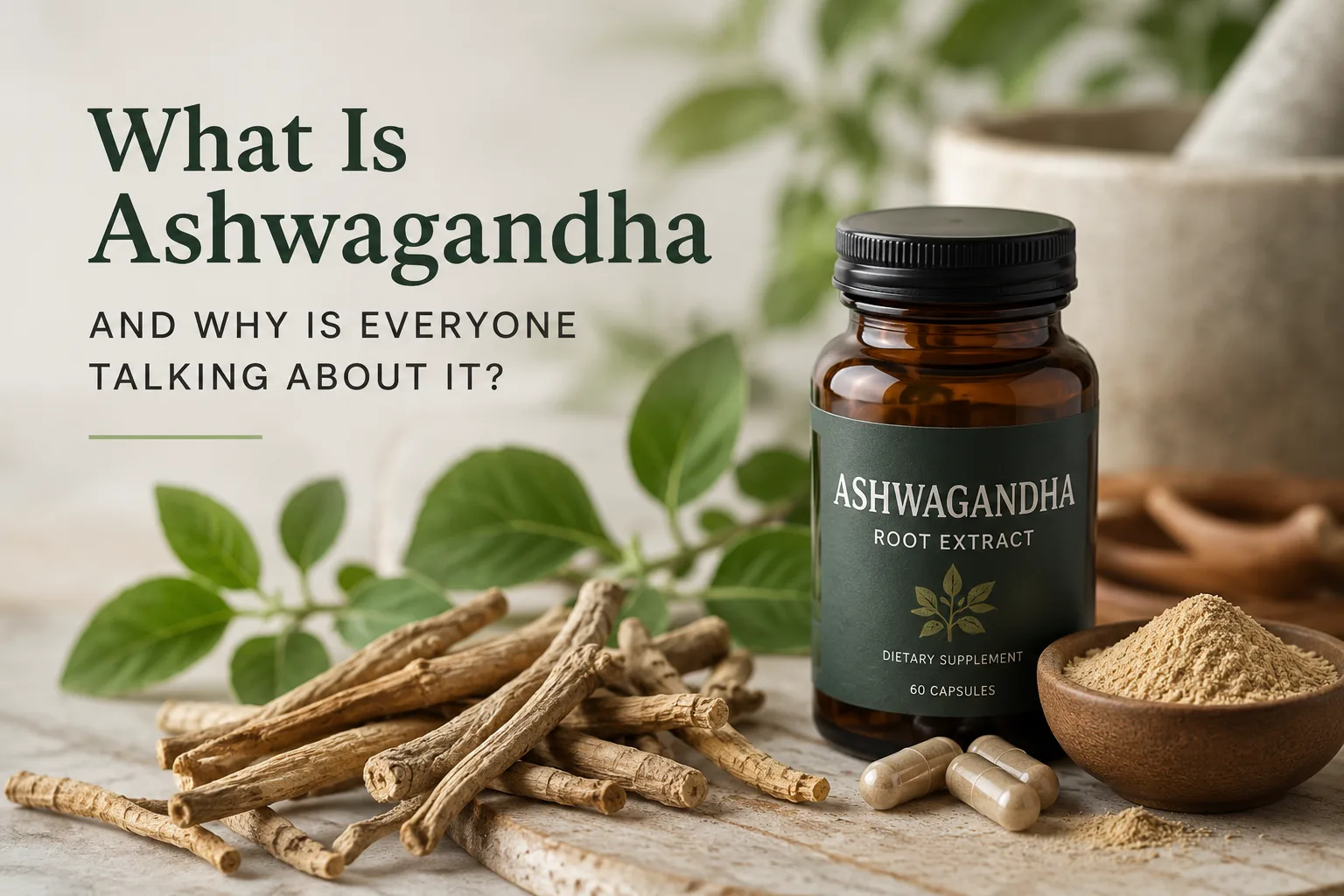
If you’ve spent any time on social media recently or browsed the wellness aisle at your local pharmacy, you’ve probably come across ashwagandha. From influencers sharing their bedtime routines to health enthusiasts praising its calming effects, this ancient herb has become one of the most talked-about natural supplements in the world.
But what exactly is ashwagandha, and does it really live up to the hype?
What Is Ashwagandha?
Ashwagandha (Withania somnifera) is a medicinal herb that has been used for more than 3,000 years in Ayurvedic medicine, a traditional system of healing that originated in India. It is often referred to as an adaptogen, meaning it may help the body adapt to physical and emotional stress.
The roots and leaves of the plant are commonly dried and turned into powders, capsules, gummies, teas, and liquid extracts.
Why Is Everyone Talking About It?
The growing interest in ashwagandha comes from the increasing number of people looking for natural ways to manage the pressures of modern life. While it is not a miracle cure, research suggests that it may offer several potential benefits when taken correctly.
Some of the reasons people are trying ashwagandha include:
- Helping to reduce feelings of stress.
- Supporting better sleep quality.
- Promoting a greater sense of calm.
- Improving focus and concentration.
- Supporting physical performance and recovery.
- Helping the body respond to everyday stress.
Although many people report positive experiences, results can vary from person to person.
How Does Ashwagandha Work?
When you’re under stress, your body produces a hormone called cortisol. While cortisol is important in small amounts, constantly elevated levels can leave you feeling anxious, exhausted, or overwhelmed.
Researchers believe ashwagandha may help regulate the body’s stress response, potentially supporting healthier cortisol levels. This is one of the main reasons it has become so popular among people juggling demanding jobs, family responsibilities, and busy lifestyles.
Potential Benefits of Ashwagandha
Although more research is still being conducted, studies have linked ashwagandha with several possible health benefits.
Stress and Anxiety Support
This is by far the most common reason people take ashwagandha. Several clinical studies suggest it may help reduce perceived stress and promote relaxation.
Better Sleep
Many users say they sleep more deeply after taking ashwagandha regularly. Some research supports its potential role in improving overall sleep quality, especially in people experiencing stress-related sleep disturbances.
Improved Energy
It might seem surprising that something associated with relaxation can also support energy. However, when stress levels decrease and sleep improves, many people naturally feel more refreshed during the day.
Exercise Performance
Some athletes and gym-goers use ashwagandha supplements to support strength, endurance, and recovery. While early research is encouraging, it should not replace proper training or nutrition.
Brain Health
Researchers are also studying whether ashwagandha may support memory, attention, and cognitive performance, although more evidence is needed before firm conclusions can be made.
Are There Any Side Effects?
Like any supplement, ashwagandha isn’t suitable for everyone.
Some people may experience:
- Upset stomach.
- Nausea.
- Drowsiness.
- Mild digestive discomfort.
In rare cases, more serious side effects have been reported. If you are pregnant, breastfeeding, have thyroid problems, liver disease, autoimmune conditions, or take prescription medication, speak to your doctor or pharmacist before using ashwagandha.
How Should You Take It?
Ashwagandha is available in several forms, including:
- Capsules
- Tablets
- Gummies
- Powders
- Liquid extracts
The best option depends on your personal preference. Always follow the dosage instructions on the product label or the advice of your healthcare provider rather than assuming more is better.
Is Ashwagandha Worth Trying?
For many people, ashwagandha has become a useful addition to a healthy lifestyle, especially when combined with good sleep, regular exercise, balanced nutrition, and effective stress management.
However, it’s important to remember that no supplement can replace healthy habits, and what works for one person may not work for another.
The Bottom Line
Ashwagandha has earned its place in the wellness spotlight because of its long history in traditional medicine and the growing body of research exploring its potential benefits. While it may help support stress management, sleep, and overall wellbeing for some people, it’s not a quick fix or a cure-all.
If you’re curious about trying ashwagandha, choose a reputable product, follow the recommended dosage, and speak to a healthcare professional if you have any underlying health conditions or concerns. As with any supplement, the safest and most effective approach is an informed one.