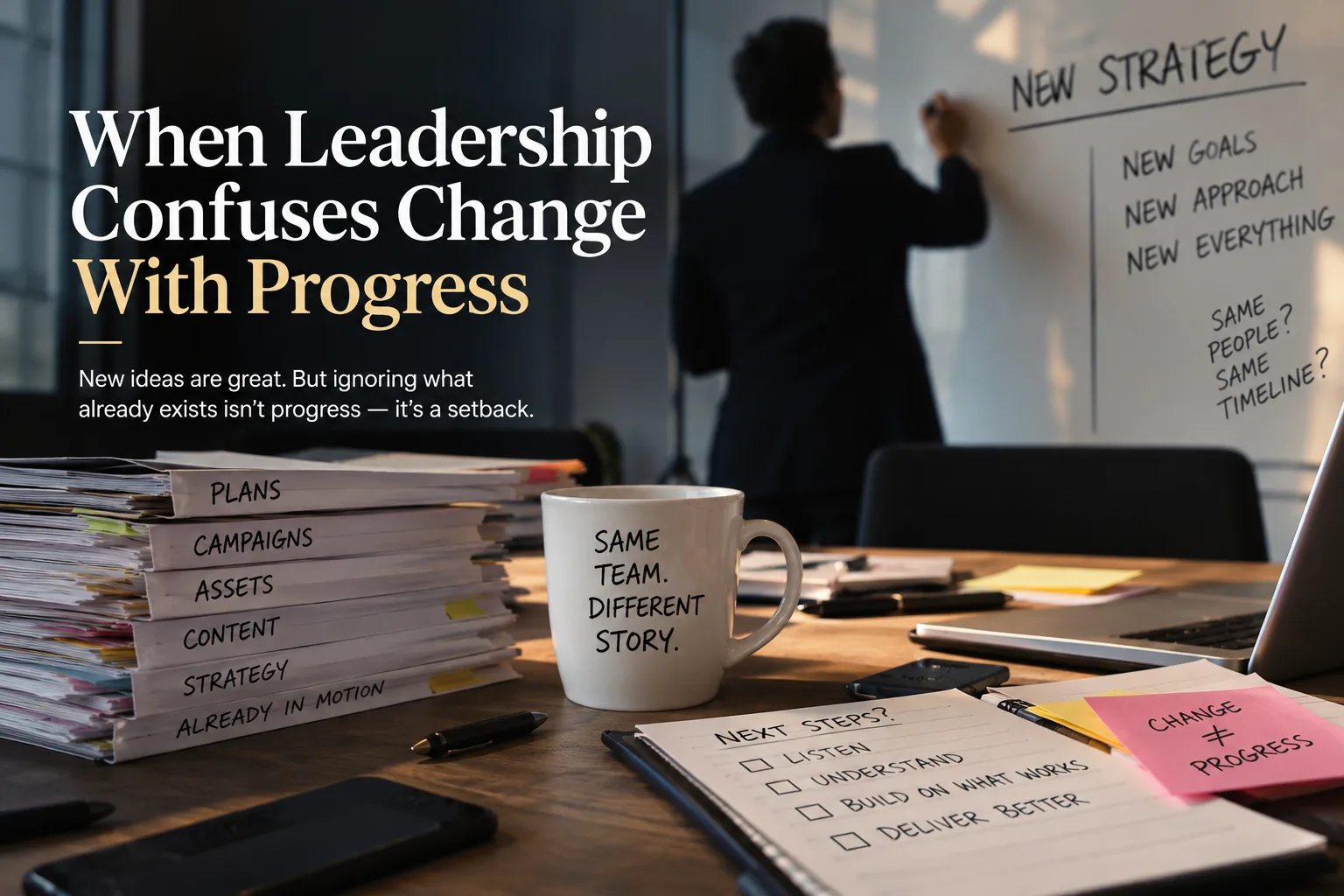
There is something incredibly frustrating about finding out there is a major strategy weeks before execution, especially when the people expected to deliver it have already been working for months.
Plans have been made. Strategies have been developed. Content has been briefed. Assets are already in motion. Then suddenly, a new strategy appears and everyone is expected to somehow make everything fit. Apparently, there was a bigger plan. We just weren’t part of the conversation.
I understand new leadership wanting to change things. New leaders come with new ideas, new targets and different expectations. That is normal. What I struggle to understand is the desire to rebuild everything without first understanding what already exists.
Surely leadership should begin with listening. What worked before? What failed? Where were the pain points? What did previous campaigns teach us? What have the people actually doing the work learned over the years?
You cannot walk into an established environment, ignore its history and assume everything needs to start again. Change without context is not automatically progress.
What makes it even more frustrating is when ambitious strategies are handed to people who struggle with the basics of execution. A strategy can be brilliant on paper, but somebody still needs to write a proper brief, confirm the dates, understand the channel requirements, check that every asset has arrived and actually have a plan.
Attention to detail matters.
You should not discover missing assets at the last minute simply because nobody bothered to create a checklist. You should not constantly correct dates that should have been checked before a brief went out. Poor planning does not magically become agility because everyone is suddenly working under pressure.
Then there is analytics. Every strategy should answer one simple question: How will we know if this worked? Not whether the campaign looked good. Not whether everyone was busy. What did the customer do? What improved? What failed? What did we learn?
The saddest part is watching knowledgeable people sit quietly while all of this happens. Sometimes experience comes with bruised egos, politics and an unwillingness to challenge decisions. So everyone nods, adjusts and carries on.
And perhaps that is how organisations lose valuable knowledge.
New leadership should challenge what came before. It should not pretend nothing valuable existed before it arrived.
There is a difference between building something better and simply starting again.
I just wish more people understood it.