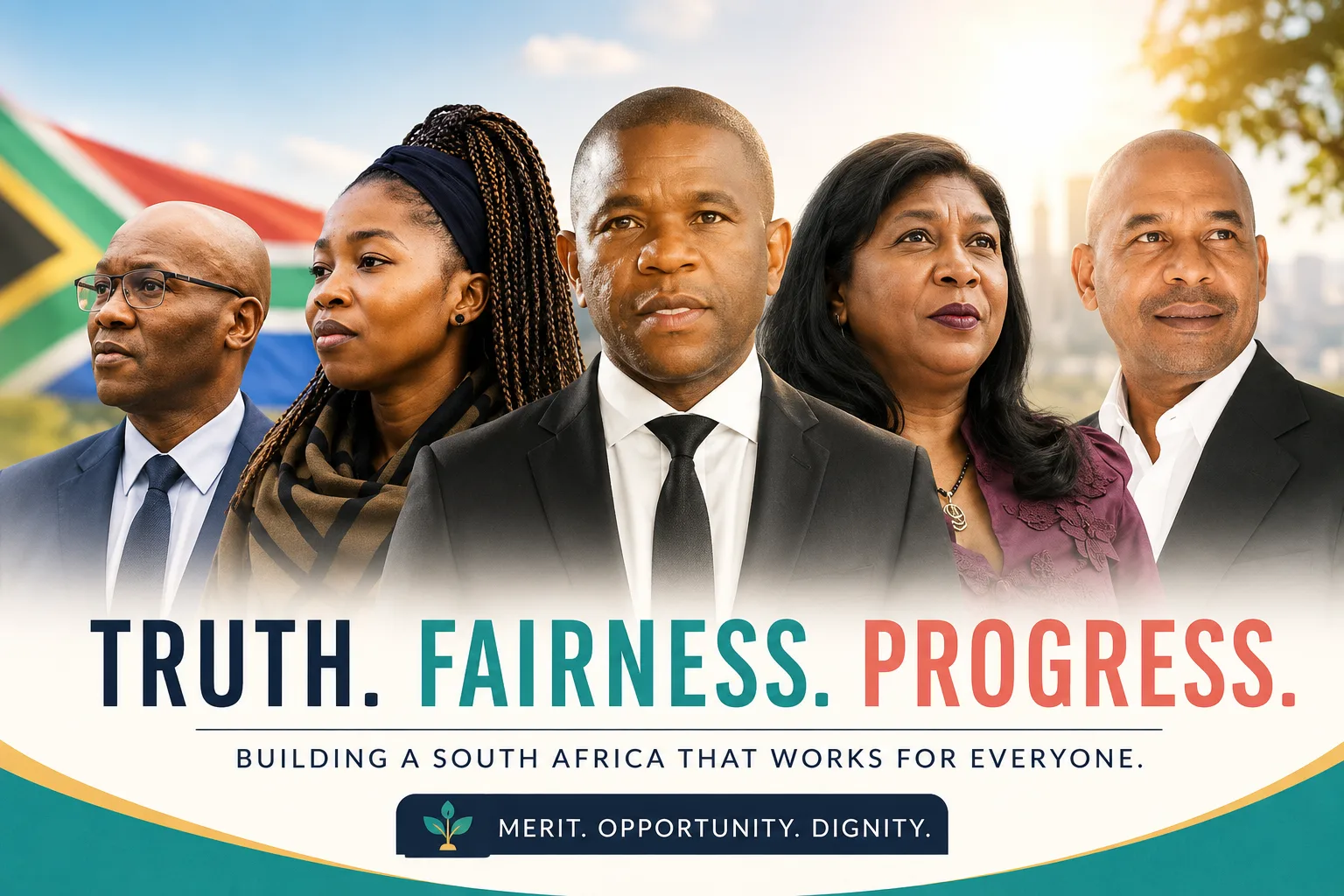
There are moments that force a nation to stop and ask uncomfortable questions. Not because the answers are easy, but because they reveal something many people have quietly felt for years. Recent public hearings surrounding a senior police appointment have become one of those moments. Regardless of where the legal process ultimately ends, the proceedings have exposed how quickly public opinion can be shaped, how easily reputations can be damaged, and how important it is to examine the facts before reaching conclusions.
For many South Africans, this story has struck a much deeper nerve. It is not simply about one individual. It has become symbolic of a feeling that countless ordinary people experience throughout their lives. It is the feeling that every time they finally meet the standard, the standard changes.
We are raised to believe that education is the great equaliser. Children are told that if they work hard, remain disciplined, and obtain qualifications, opportunities will eventually follow. Families make enormous sacrifices because they believe education is the safest investment they can make. Parents take on debt, work multiple jobs, and go without basic necessities so that their children can have the opportunity they never had.
Obtaining a qualification in South Africa is not a small achievement. For many people, it represents years of sacrifice, resilience and determination. It is earned through financial hardship, emotional pressure and countless obstacles. Every certificate tells a story of someone who refused to give up despite the odds.
That is why so many people become disillusioned when they enter the workplace.
They discover that qualifications alone are no longer enough. Experience suddenly becomes the deciding factor. Once experience has been gained, different requirements emerge. New expectations appear. The benchmark shifts. The opportunity that once seemed within reach feels just as distant as it did before.
After a while, people begin to wonder whether they are chasing success or chasing a finish line that keeps being moved.
The recent commission hearings brought that feeling back into the national conversation. What many people initially believed about the case began to change as more evidence was presented. Documents were examined. Qualifications were scrutinised. Questions were asked about whether the facts had been fully understood before serious conclusions were reached.
The hearings reminded South Africans of something that should never be controversial. Facts matter. Evidence matters. Due process matters.
However, they also reminded many people of something far more personal.
How many professionals have walked into interviews already feeling they must prove they deserve to be there?
How many employees have exceeded every performance target only to be told they are still “not quite ready” for promotion?
How many talented people have accepted salaries that do not reflect their skills because they were made to feel fortunate simply to have employment?
These experiences are rarely discussed publicly, yet they are shared quietly in offices, boardrooms and lunchrooms across the country. People speak about feeling overlooked despite consistently delivering results. They speak about carrying responsibilities far beyond their job descriptions while waiting endlessly for recognition that never arrives. They speak about constantly being expected to prove themselves all over again.
Perhaps the most damaging part is not the rejection itself. It is the gradual erosion of confidence.
When someone repeatedly feels that their qualifications are questioned, their experience discounted, or their achievements minimised, they eventually begin questioning themselves. They become reluctant to apply for new opportunities. They stop negotiating for better salaries. They convince themselves that asking for more is unreasonable, even when they have earned it.
That is how potential is slowly diminished.
The conversation is therefore much bigger than one public case. It is about trust. It is about whether ordinary South Africans still believe that effort, competence and dedication will be rewarded fairly. It is about whether education continues to represent opportunity or whether too many people are beginning to see it as a promise that is becoming increasingly difficult to believe.
A society cannot continue encouraging its young people to invest everything in education while allowing them to feel that the rules are constantly changing. It cannot celebrate graduates while leaving many of them wondering whether their qualifications will ever be judged on merit alone. Nor can it expect people to remain hopeful if they repeatedly feel that every step forward is met with another obstacle.
Recent events should serve as a reminder that fairness is not simply about the outcome of one case. Fairness is about ensuring that every person is judged on evidence rather than assumptions, on ability rather than perception, and on facts rather than narratives.
Because when people lose confidence that the system will treat them fairly, the damage extends far beyond employment. It weakens belief in institutions, discourages future generations, and chips away at the very idea that hard work still matters.
Perhaps that is the question South Africa should be asking itself. Not whether people are willing to work hard, but whether we are doing enough to ensure that hard work is still rewarded with fairness, dignity and genuine opportunity.