There are few things more heartbreaking than hearing that someone has taken their own life. In the aftermath, we are often left asking questions that may never have answers. We wonder what they were feeling, whether anyone noticed they were struggling and if something could have been done differently. Suicide leaves behind more than grief. It leaves behind families searching for answers, friends carrying guilt and communities trying to understand the unimaginable.
Sadly, these conversations have become all too familiar. Every time another life is lost, we promise to check in on the people we love, to be kinder to one another and to take mental health more seriously. Yet, as time passes, life returns to normal until another tragedy reminds us that too many people are still suffering in silence.
This article is not about one person or one tragedy. It is about all of us. It is about the world we live in, the pressures people carry and the loneliness that so often goes unnoticed.
Depression Doesn’t Always Look the Way We Expect
Many people believe depression is easy to recognise. They imagine someone who is constantly crying, withdrawing from everyone around them or openly saying they are struggling. The truth is often very different. Depression can exist behind a smile, a successful career, a busy family life or the person who is always making sure everyone else is okay.
Some people become incredibly good at hiding their pain. They continue showing up for work, meeting deadlines, caring for their children and supporting their friends while quietly carrying a weight that nobody else can see. The strongest people are not always the ones who are coping the best. Sometimes they are simply the ones who have become the best at hiding how much they are hurting.
The Loneliness That Doesn’t Make Sense
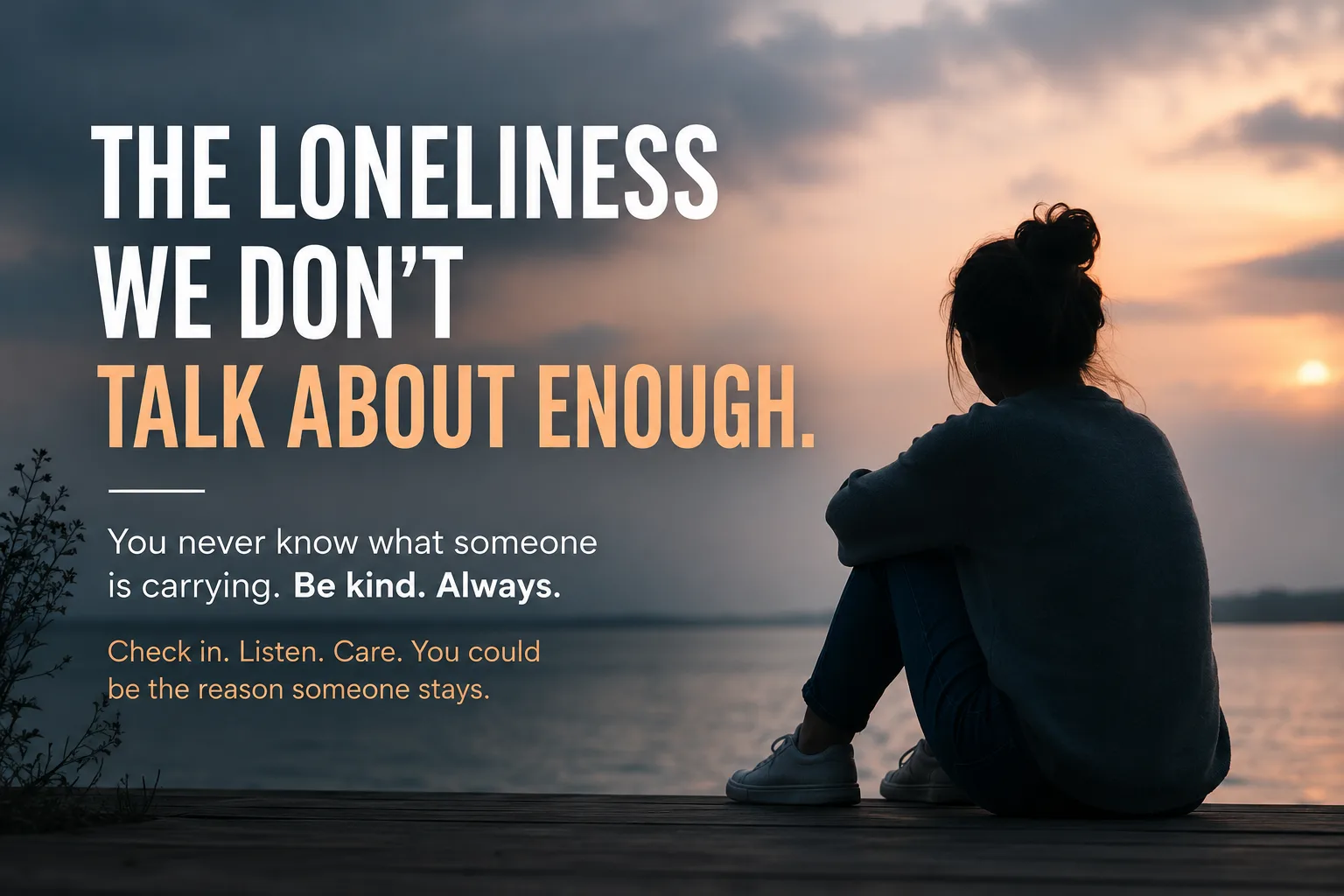
One of the hardest things to explain is the kind of loneliness that has nothing to do with being physically alone. A person can be surrounded by family, colleagues and friends and still feel completely invisible. They can laugh at dinner, attend meetings, celebrate birthdays and still go home feeling as though nobody truly knows how they are doing.
There are people who spend their lives being everyone else’s support system. They are the first to listen when someone needs advice, the first to offer help during difficult times and the first to put other people’s needs ahead of their own. Yet when they need someone to lean on, they often discover there is nobody standing beside them.
That kind of loneliness is difficult to describe because it cannot always be seen. It is the feeling of carrying everything by yourself while convincing the world that you are fine.
Success Cannot Protect Someone From Emotional Pain
One of the most common reactions after a tragedy is hearing people say, “But they had so much going for them.” While those words are usually spoken with love, they also reveal how little we understand about mental health.
Depression does not discriminate. It does not care about your job title, your bank balance, your education or your achievements. It does not ask whether you have children, a successful career or a home filled with people who love you. Emotional pain is not measured by outward success, and suffering should never be dismissed simply because someone appears to have a good life.
The reality is that we never truly know what another person is carrying.
The World Needs More Kindness
Every single day we walk past people whose battles we know nothing about. The colleague who seems unusually quiet may be carrying grief. The cashier who forgot to smile may be struggling with anxiety. The friend who has become distant may be overwhelmed by problems they have not told anyone about.
We are often quick to judge people without knowing their story. A little more patience, a little more understanding and a little more kindness could make a bigger difference than we realise. Kindness may not solve someone’s problems, but it reminds them that they matter. Sometimes that reminder is more powerful than we know.
We Need to Make It Easier to Say, “I’m Not Okay”
For far too long, many people have believed that asking for help is a sign of weakness. They fear being judged, misunderstood or becoming a burden to the people they love. As a result, they stay silent and continue carrying their pain alone.
That silence can be incredibly dangerous.
We need to create families, friendships, workplaces and communities where people feel safe enough to admit they are struggling. We need to ask each other, “How are you really doing?” and be prepared to listen to the answer without rushing to fix everything. Sometimes people do not need solutions. Sometimes they simply need to know that someone is willing to sit with them in their pain.
A Conversation That Cannot Wait
Mental health should not only become important after another tragedy. It should be part of our everyday conversations. We should be checking in on our friends before they disappear, listening before people reach breaking point and reminding those around us that they do not have to carry life’s burdens alone.
We cannot prevent every tragedy, and we cannot always know what someone else is experiencing. However, we can choose to build a world where compassion is louder than judgment, where kindness is more common than criticism and where asking for help is seen as an act of courage rather than weakness.
If This Feels Personal
If these words resonate with you, please remember this. You are not weak because you are struggling. You are not a burden because you need support. Your pain is real, and your life has value, even on the days when it is hardest to believe that yourself.
There is always hope, even when life feels unbearably heavy. Reaching out for help is not giving up. It is choosing to believe that tomorrow can be different from today.
Perhaps the greatest lesson we can all learn is this: we never truly know what someone else is carrying.
So let us be slower to judge.
Let us be quicker to listen.
Let us be kinder with our words.
And let us remind the people around us that they do not have to face life’s darkest moments alone.
Because sometimes, the words that make the biggest difference are also the simplest.
“I’m here. Tell me how you’re really doing.”