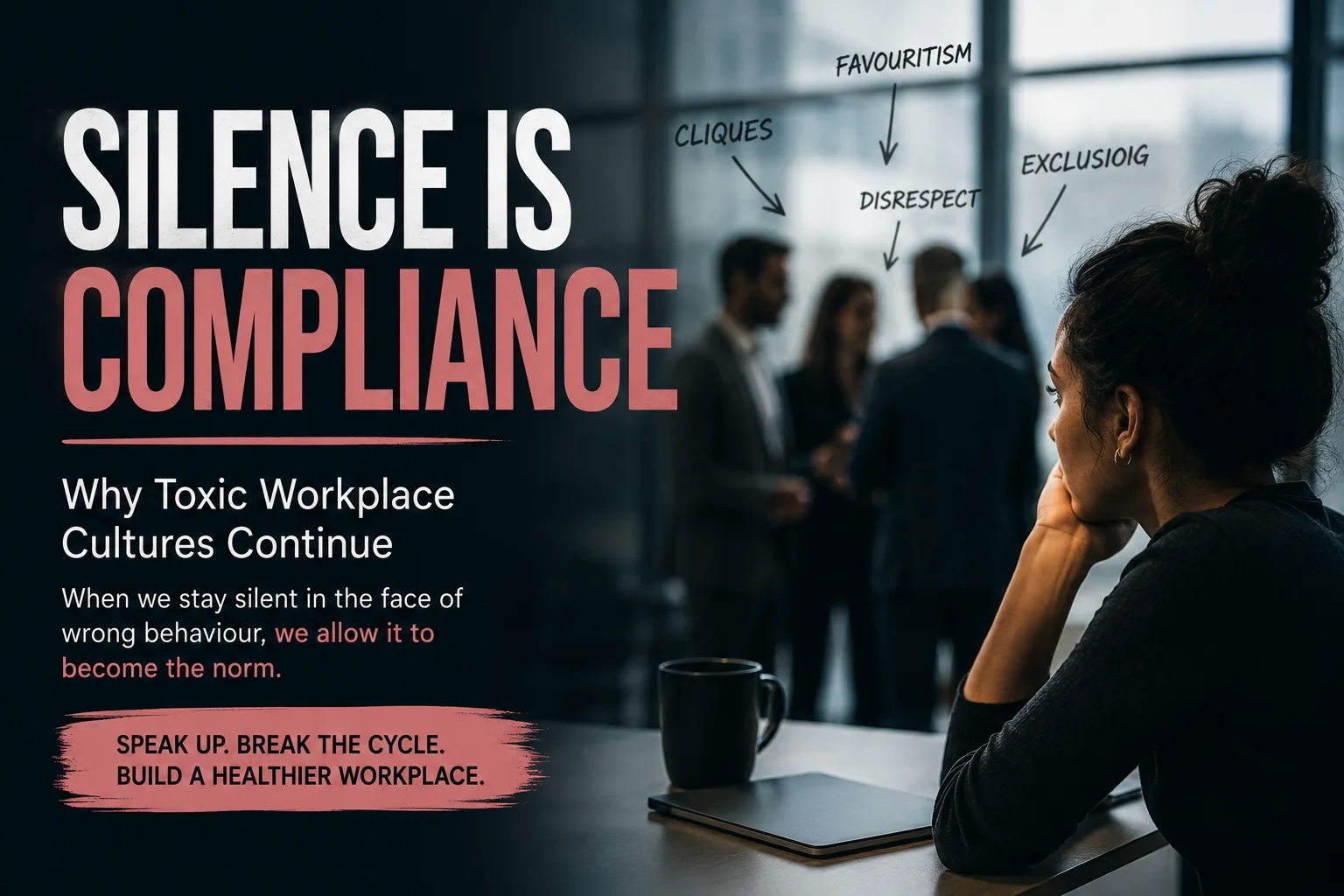
Toxic workplace cultures rarely appear overnight. They develop gradually through behaviours that are ignored, excused or accepted for far too long. What begins as the occasional act of disrespect slowly becomes part of everyday working life. Small incidents accumulate over time until employees begin believing that unhealthy behaviour is simply the way things are done. That is how toxic cultures survive.
Many organisations only begin talking about workplace culture after relationships have already broken down. Meetings are arranged, employees are reminded to respect one another and leadership acknowledges that improvements are needed. While those conversations are important, they often leave employees wondering why concerns were not addressed much earlier. By the time organisations begin speaking about culture, many employees have already spent months or even years living with the consequences of a broken one.
Over the years, I have come to believe one thing very strongly: silence is compliance. That does not mean everyone agrees with unhealthy behaviour. Rather, it means that when damaging behaviour continues without being challenged, it becomes normalised. People gradually accept what they once would have questioned because remaining silent often feels safer than speaking up.
There are many reasons people choose silence. Some fear becoming the next target if they raise concerns. Others worry that speaking honestly could affect their careers or damage relationships with colleagues. There are also those who benefit from the existing culture and therefore have little reason to question it. Regardless of the motivation, the outcome is often exactly the same. Harmful behaviour continues because nobody feels able or willing to interrupt it.
The consequences of prolonged silence are significant. Employees begin withdrawing from conversations because they no longer believe their opinions matter. Teams stop collaborating because trust has been replaced by suspicion. People become reluctant to ask questions, share ideas or admit mistakes because they fear criticism rather than support. Over time, workplaces stop feeling like communities built on shared purpose and instead become environments where people simply try to avoid becoming the next problem.
One of the greatest tragedies of toxic workplace cultures is that they rarely affect everyone equally. Some employees continue thriving while others quietly lose confidence, motivation and hope. Those who feel excluded or overlooked often carry that emotional burden long after the working day has ended. Workplace culture does not remain at the office. It follows people home, affecting their confidence, their relationships and, in many cases, their mental wellbeing.
It is also important to recognise that culture is shaped as much by what organisations tolerate as by what they celebrate. Every decision communicates something. Every unresolved complaint sends a message. Every instance where accountability is applied inconsistently teaches employees what behaviours are likely to be overlooked. Over time, people stop listening to organisational values because they place greater trust in what they consistently observe.
Creating healthier workplaces requires far more than acknowledging that problems exist. It requires leaders who are willing to listen without becoming defensive. It requires accountability that applies equally to everyone, regardless of seniority or influence. It requires employees who feel psychologically safe enough to raise concerns without fearing retaliation. Most importantly, it requires organisations to understand that trust is built through consistent action rather than well-intentioned conversations.
Real cultural change is rarely comfortable because it requires people to confront difficult truths about themselves and the environments they have helped create. However, meaningful change is impossible without that honesty. Employees do not expect perfection from leaders, but they do expect fairness, integrity and a genuine willingness to address problems instead of ignoring them.
Healthy workplace cultures are created one decision at a time. They are strengthened every time respect is demonstrated, fairness is upheld and accountability is applied consistently. Likewise, they are weakened every time harmful behaviour is excused because confronting it feels inconvenient.
That is why I continue to believe that silence is compliance. When we remain silent in the face of behaviour that harms others, we unintentionally become part of the system that allows it to continue. Real change begins the moment individuals and organisations decide that protecting people matters more than protecting unhealthy cultures.