
There is one thing about me that many people who read Hello Lelo may not know. I never miss a teaching moment, and this is going to be one of those moments.
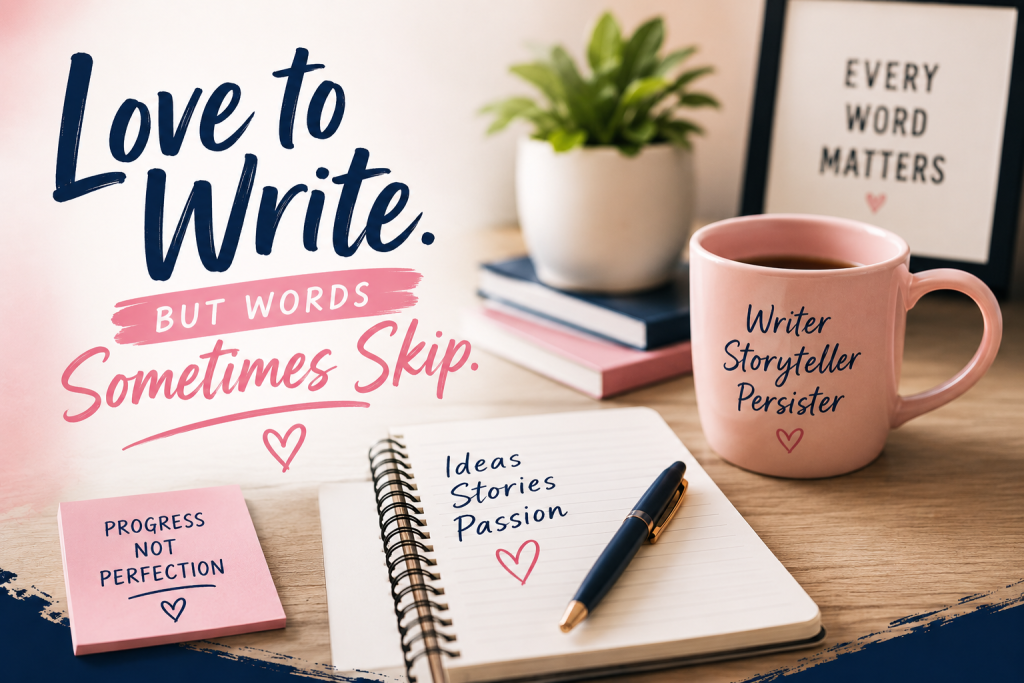
If you are anything like me, you have an undying love for writing. You love telling stories. You can picture every scene in your mind. You know exactly what you want to say. You can make people laugh, cry, think, and sometimes even challenge the way they see the world.
Then you write it down.
You read it back.
It makes sense.
Or at least you think it does.
Then, a day later, or even a week later, you read the very same piece again and suddenly wonder, “How on earth did I miss that?”
There are missing words everywhere.
A sentence that made perfect sense in your head suddenly reads like someone removed half the puzzle pieces.
For years, I thought I was just careless.
I thought I was rushing.
I thought I simply needed to proofread more.
Then, while scrolling through TikTok recently, I came across a video about people who regularly skip words when they write. I had always heard about dyslexia, but I never knew that difficulties with written language could show up in different ways. Listening to other people’s experiences felt strangely familiar. For the first time, I realised I wasn’t the only person dealing with this.
I’m not saying I have a specific condition because that requires a proper assessment by a qualified professional. But hearing other people describe the same struggle helped me understand that what I’ve experienced for years isn’t something I simply imagined.
When Your Brain Moves Faster Than Your Fingers
The strange thing is that I know exactly what I want to say.
The story is complete in my head.
But somewhere between my thoughts and my keyboard, words disappear.
Instead of writing:
“I have a blog, but it crashed last year and I’m tired of having to rebuild it.”
My brain somehow produces something like:
“I have… blog… crashed… last… and I’m tired… having to rebuild… blog.”
When I read it immediately after writing, I don’t even notice anything is wrong.
My brain fills in the missing words because it already knows what I meant.
It is only much later, when I look at it with fresh eyes, that the mistakes become painfully obvious.
And they are often such small mistakes.
Missing “the.”
Missing “to.”
Missing “of.”
Missing “that.”
Tiny words that completely change how a sentence reads.
The Frustration Nobody Sees
People often think writing is simply putting words on a page.
It isn’t.
Writing is translating thoughts into language.
When your thoughts are racing ahead but your writing doesn’t quite keep up, it can be incredibly frustrating.
What makes it even harder is that people don’t see the hundreds of times you reread your work before publishing it.
They only see the mistake that somehow survived all those rounds of editing.
As someone who genuinely loves writing, those mistakes used to bother me far more than they bothered anyone else.
You Can Love Writing and Still Struggle With Writing
That was probably the biggest lesson for me.
Having difficulty writing accurately doesn’t mean you are a bad writer.
It doesn’t mean you aren’t creative.
It doesn’t mean you have nothing worth saying.
Some of the best storytellers in the world have learned differently, process information differently, or experience challenges that most readers never notice.
The story still matters.
Your voice still matters.
Sometimes you simply need different tools to help bring your ideas to life.
What Has Helped Me
I’ve learned not to trust my first proofreading session.
If I really care about a piece, I leave it for a day before reading it again.
I also read my work aloud because my ears often catch mistakes that my eyes ignore.
And yes, I sometimes ask AI to proofread my work—not because it writes for me, but because it helps me spot the words my brain accidentally skipped.
There is nothing wrong with using tools that help you communicate more clearly.
You Are Not Alone
If you’ve spent years wondering why your writing always seems to be missing random words, know that you are not the only one.
Whether it turns out to be dyslexia, ADHD, another learning difference, or simply the way your brain processes language, you deserve understanding—not embarrassment.
If this has been something you’ve struggled with since childhood, it may even be worth speaking to a qualified professional who can assess what is happening and suggest strategies that work for you.
For me, simply discovering that other people experience this too was a relief.
It reminded me that sometimes the greatest teaching moments are the ones where we realise we were never alone in the first place.
And if sharing my story helps even one person stop beating themselves up over missing words, then this teaching moment was worth writing.