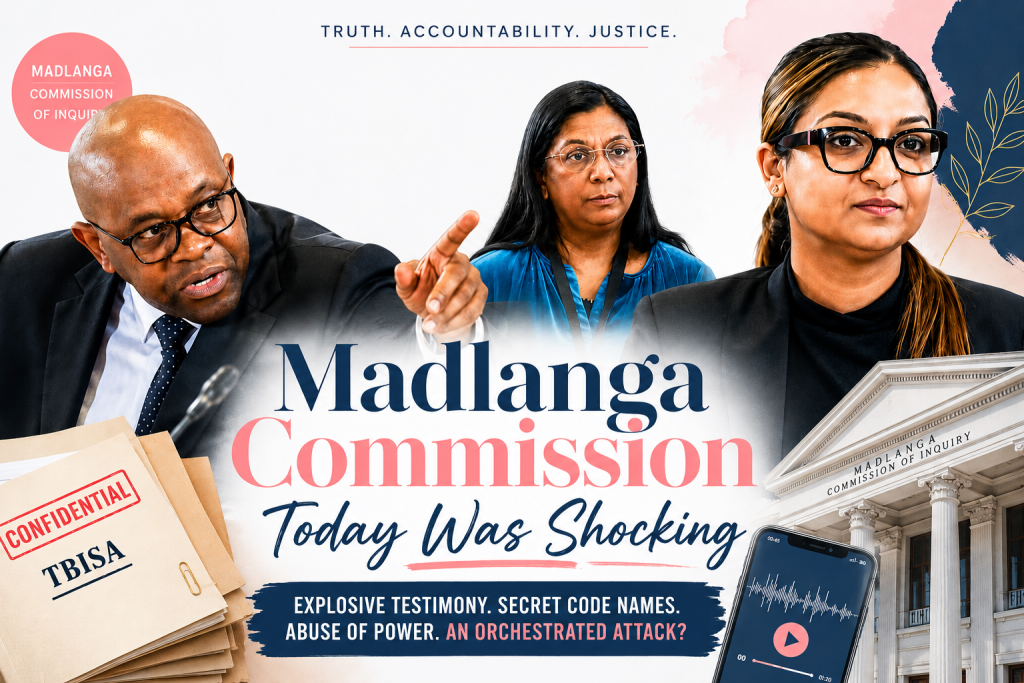

The Madlanga Commission of Inquiry delivered one of its most dramatic days yet, and for many South Africans watching the proceedings, today’s testimony raised uncomfortable questions about the integrity of institutions that were created to fight corruption.
One moment, in particular, stood out.
When a recorded phone conversation involving Advocate Andrea Johnson was played before the Commission, it changed the atmosphere in the room. It was one of those moments where reality feels stranger than fiction. If you were following the proceedings live, chances are you found yourself thinking, “No ways.”
Whether the Commission ultimately accepts every allegation remains to be seen. But what emerged today painted a picture of an institution that, according to the witness, may have drifted far from the principles it was supposed to uphold.
Explosive Claims Against IDAC
State Advocate Prenisha Ramsamy, a senior prosecutor who worked within the Investigating Directorate Against Corruption (IDAC), made a series of allegations that, if proven, would have significant implications for South Africa’s criminal justice system.
Among the most striking claims were:
- Major corruption investigations allegedly operated under misleading code names. According to testimony, the R360-million Medicare 24 investigation was internally referred to as “TBISA,” obscuring the true nature of the matter.
- An official operations manual allegedly existed despite leadership claiming there were no Standard Operating Procedures. Documentary evidence presented reportedly showed that a signed manual had been approved, raising questions about why witnesses previously suggested otherwise.
- Investigative powers under Section 28 were allegedly used against prosecutors themselves. Ramsamy claimed that officials who questioned decisions or challenged instructions became subjects of investigations instead of simply having their concerns addressed.
- A workplace culture of fear. According to the testimony, prosecutors who raised concerns were marginalised, threatened, or pushed aside, with some reportedly requiring mental health counselling because of the work environment.
These are serious allegations. They have been presented before the Commission but have not yet been finally determined or proven, and the individuals concerned will have an opportunity to respond.
The Alleged “Orchestrated Attack”
Perhaps the most serious allegation of the day involved claims that Advocate Andrea Johnson and Dylan Perumal used IDAC’s investigative machinery to pursue senior SAPS officials, including General Dumisani Khumalo and National Commissioner General Fannie Masemola.
Ramsamy testified that the investigation moved with unusual speed despite what she described as an insufficient evidentiary foundation.
She further alleged that:
- Johnson exercised unusually close control over investigative decisions.
- Dockets were allegedly ordered to be collected before formal processes had been completed.
- Certain senior oversight officials were allegedly excluded from the process.
- Individuals were reportedly briefed about aspects of the investigation before key legal authorisations had even been signed.
These allegations go to the heart of whether investigative powers were being used to follow evidence or whether evidence was allegedly being sought to justify investigations that had already been decided upon.
Again, these are allegations made under oath before the Commission and remain subject to examination and response.
The Recorded Phone Call Changed Everything
While today’s proceedings contained many technical legal discussions, the recorded phone call involving Andrea Johnson was arguably the defining moment.
Hearing an actual recording, rather than simply listening to competing versions of events, gave many viewers the feeling that they were witnessing something much more tangible than legal argument.
For many watching, it was one of those rare Commission moments where public interest suddenly shifts from legal procedure to genuine disbelief.
It reminded South Africans why commissions of inquiry matter. Documents tell one story. Witnesses tell another. But recordings have a way of forcing everyone to confront the evidence directly.
This Is Bigger Than One Person
It would be easy to reduce today’s testimony to a debate about Andrea Johnson or Dylan Perumal.
That would be a mistake.
The bigger question is whether the institutions designed to investigate corruption are themselves operating according to the law, with proper oversight and accountability.
South Africa has invested enormous hope in specialist anti-corruption units. These bodies are expected to investigate powerful people without fear or favour. But with that power comes an equally important responsibility: to follow lawful processes and protect the rights of everyone involved.
If internal rules can be ignored, if oversight mechanisms can be bypassed, or if investigative powers are ever used for purposes other than pursuing evidence, then public confidence in the justice system inevitably suffers.
The Commission Still Has Work to Do
Today’s testimony was undoubtedly dramatic, but commissions exist precisely because allegations must be tested.
Witnesses will be challenged.
Evidence will be examined.
Other parties will have opportunities to respond.
Only after that process can firm conclusions be reached.
For now, today’s proceedings have raised difficult questions rather than delivered final answers.
Final Thoughts
One of the most important principles in any democracy is that nobody should be above scrutiny—not politicians, not police generals, not prosecutors, and not anti-corruption investigators.
If the allegations made today are eventually substantiated, South Africa may need to confront uncomfortable truths about how some of its most powerful investigative tools have been used.
If they are not, then the Commission’s process will have served another important purpose by testing those allegations openly.
Either way, today’s hearing reminded the country that accountability must apply to those enforcing the law just as much as it applies to those accused of breaking it.
The Madlanga Commission is far from over, but after today’s testimony, many South Africans will be watching the next witnesses even more closely.