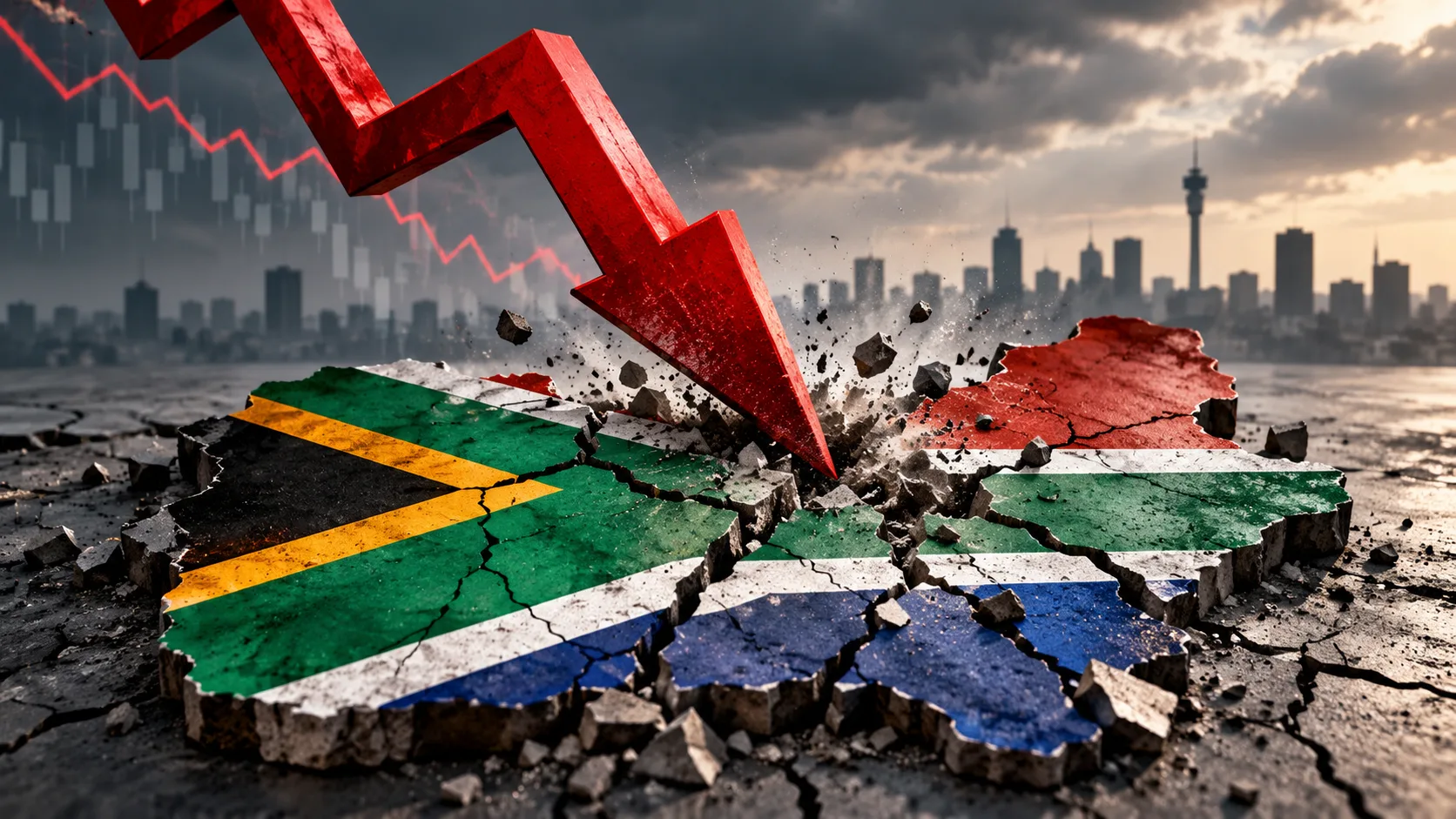
There is something deeply unsettling about watching a country struggle under the weight of unemployment, rising living costs, weak growth, failing infrastructure and growing public frustration while government continues to speak as though these are temporary inconveniences that simply require more patience.
South Africans are not imagining the pressure. The numbers are severe. In the second quarter of 2026, the official unemployment rate reached 33.6%, with approximately 8.5 million people officially unemployed. These are not just statistics. They represent households without income, graduates sitting at home, parents unable to provide consistently for their children and young people entering adulthood with fewer opportunities than the generation before them.
At some point, we have to stop normalising this.
When unemployment remains at levels this high for this long, the damage reaches far beyond the individual who cannot find work. It weakens the tax base, suppresses consumer spending, increases household dependence and intensifies pressure on already stretched public services. It also creates a social environment in which frustration, hopelessness and instability become easier to understand.
The problem is that South Africa often discusses each crisis as though it exists separately. Unemployment is treated as one problem, municipal decline as another, crime as another, fuel and transport costs as another, and struggling public services as yet another. In reality, these problems compound one another. A person without work is more vulnerable to rising food and transport costs. A struggling municipality makes it harder for businesses to operate. Weak infrastructure discourages investment. Less investment means fewer jobs.
That cycle becomes almost impossible to break when economic growth remains too weak to absorb the millions of people desperately looking for employment.
There is also a growing disconnect between the way economic conditions are described institutionally and the way ordinary South Africans experience them. For many people, economic performance is not measured through speeches, policy documents or economic forecasts. It is measured at the petrol station, at the supermarket, at the electricity meter and in the balance remaining in a bank account at the end of the month.
This is why reassurance is no longer enough.
South Africans should not have to wait for total economic collapse before the situation is treated with the urgency it deserves. A country does not have to become a failed state before citizens are entitled to demand significantly better performance from government.
The most dangerous response to economic decline is complacency. It is easy for people who still have stable incomes, private healthcare, reliable transport and financial buffers to convince themselves that the crisis belongs to somebody else. You have a job, so unemployment is somebody else’s problem. You can afford petrol, so rising transport costs are somebody else’s problem. You have private medical aid and private security, so failing public systems are somebody else’s problem.
Until they are not.
Economic deterioration does not stay neatly contained in one community or one income group.
When enough households become poorer, businesses lose customers. When businesses struggle, employment suffers. When employment suffers, the pressure on government rises. When public resources shrink while demand continues growing, services deteriorate even further.
Eventually, the consequences reach everyone.
That is why the conversation cannot simply be about surviving another difficult year. It has to be about whether South Africa is building an economy capable of giving millions of people a realistic path into work, dignity and economic participation.
The country does not need more acceptance of crisis as normal. It needs urgency, accountability and measurable improvement.
Most importantly, it needs leadership that understands that people cannot eat promises, pay rent with speeches or build futures on endless assurances that things will eventually improve.